
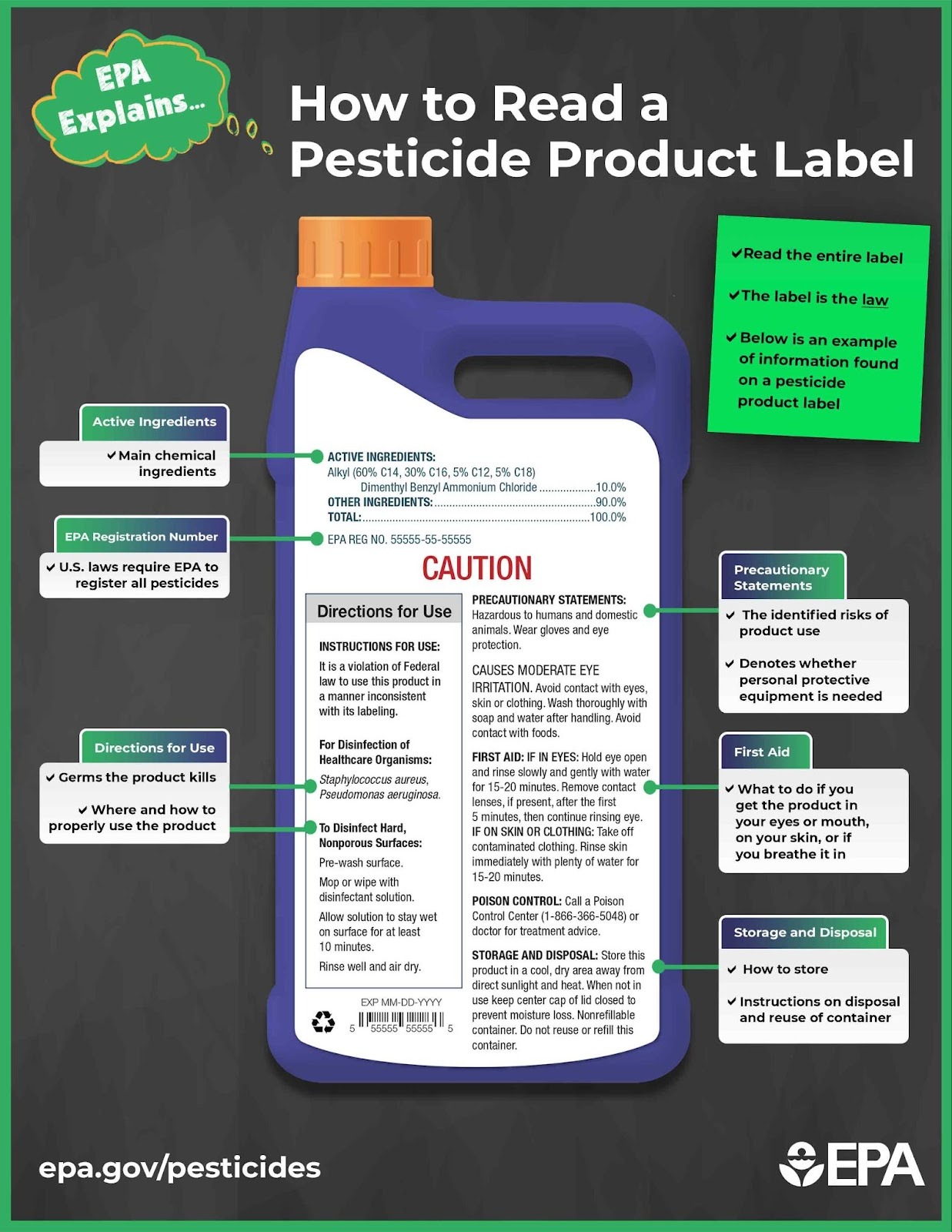
If you’ve ever wondered how to use garden chemicals safely, it starts with something most people skip: reading the label.
One of my biggest horticultural pet peeves is the use of chemicals by people who haven’t been properly trained. Think about the root word in pesticide, herbicide, and fungicide—“-cide” literally means to kill. That’s something worth remembering before you pick one up.
My goal with this post is simple: to give you a basic understanding of how dangerous these products can be if used improperly—and how to use garden chemicals safely when you do choose to use them.
It may seem obvious, but clearly it’s not. These days, it’s incredibly easy to walk into a store, grab a product off the shelf, and use it without a second thought. Most people never stop to ask:
- What exactly am I handling?
- How should I be using it safely?
As someone who has been a certified pesticide applicator for over 30 years, I can tell you that even the most common chemicals require training. The certification process isn’t overly difficult—but it makes one thing very clear:
Chemicals can be dangerous if they’re used incorrectly.

A Lesson I’ll Never Forget
At my first job after the military, I worked in a hardware store that sold a wide range of chemicals. At the time, I knew nothing about them—I just watched people come in, buy them, and use them.
Near the front door, there were always stacks of large bags of a product called Dursban. The bags often leaked—white crystals scattered across the floor, with a noticeable smell. Customers would come in daily, scoop it up with their bare hands, and spread it around their homes.
One day, out of curiosity, I read the label.
It said the product may be fatal if ingested or absorbed through the skin.
I was stunned.
I had watched countless people handle it casually, completely unaware of the risk. That moment changed how I looked at chemical use forever.
Dursban was eventually removed from the market after its active ingredient was linked to serious health issues in children, including impacts on memory and development.
Read the Label—Seriously

As a certified applicator, the label is a legally binding document. If I misuse a product, I’m legally and financially responsible.
For homeowners, the legal consequences may be different—but the personal risks are very real.
👉 Reading the label isn’t optional. It’s essential.
What You Should Pay Attention To
This isn’t a full pesticide class, but there are a few critical sections of the label you should always review:
Personal Protective Equipment (PPE)

This tells you the minimum safety gear required.
It could be as simple as:
- Long sleeves
- Pants
- Gloves
Or as serious as:
- Respirators
- Full-body protection
Personally, I never apply chemicals without:
Long sleeves, long pants, gloves, and eye protection—minimum.
If you’re tempted to skip PPE, remember:
Some of these products can be absorbed through your skin.
Chemical Type and Application
Not all chemicals are used the same way.
Ask yourself:
- Is it a concentrate or ready-to-use?
- Does it need to be diluted?
- Do I apply it to soil, leaves, or both?
Using the wrong method can make a product:
- Ineffective
- Or dangerous
Targeted Crops and Pests
Just because something is labeled as a pesticide or herbicide doesn’t mean it works on everything.
You need to match the product to your specific problem.
Otherwise, you risk:
- Wasting time
- Wasting money
- Damaging plants you didn’t intend to affect
“The Dose Makes the Poison”
This is a principle I learned in chemistry—and it applies perfectly here.
Even water can be toxic if consumed in excess.
The same applies to garden chemicals:
- Too little → it won’t work
- Too much → you create a hazard
Proper measurement matters.
Final Thoughts
There is a lot more information on a pesticide, herbicide, or fungicide label—but this is the foundation.
I can’t say it enough:
READ THE LABEL. Read the entire label.
I don’t rely heavily on chemicals in my own garden. There’s real value in hand-weeding and staying connected to your plants.
But I’m also realistic.
Sometimes life gets busy, and the choice is simple:
- Spend 8–10 hours weeding
- Or use a herbicide and move on
I’ve made that choice myself.
If you’re going to use chemicals, do it responsibly and use garden chemicals safely:
- Read the label
- Follow the instructions
- Understand what you’re using
Because at the end of the day:
These products are designed to kill—and they don’t always discriminate.
Frequently Asked Questions About Garden Chemical Safety
Do I really need to read the label on garden chemicals?
Yes. The label is the most important source of information—it tells you how to use the product safely, what protective equipment is required, and how to apply it correctly.
Do I need protective gear when using pesticides at home?
Yes. At minimum, long sleeves, pants, gloves, and eye protection are recommended. Some products may require more advanced protection like respirators.
Can I use more product to make it work better?
No. More is not better. Overuse can be ineffective, wasteful, and potentially hazardous. Proper measurement is critical.
Are all garden chemicals used the same way?
No. Some are concentrates, others are ready-to-use. Some are applied to soil, others to leaves. Always follow label instructions for proper use.
When does it make sense to use a herbicide or pesticide?
When time, scale, or severity makes manual control impractical—but it should always be done responsibly and according to the label.🧠 Educational / Awareness
Why are pesticide applicators required to be certified?
Because even common chemicals can be dangerous if misused. Certification ensures proper training in safe handling, application, and risk management.
Are products sold in stores like Home Depot or Lowe’s safe to use?
They can be safe when used correctly—but accessibility doesn’t mean they’re harmless. Proper use and understanding are essential.
If you’re new to this, start with my introduction to horticulture article and what to expect from my articles.